
In a creative twist on bilateral debt management, Pakistan and Saudi Arabia are reportedly in advanced negotiations to convert approximately $2 billion in outstanding Saudi loans into a major procurement of JF-17 Thunder fighter jets. The innovative “jets-for-loans” arrangement, first revealed by Reuters on January 7, 2026, could expand to a total package worth up to $4 billion, including additional spending on weapons, training, simulators, spares, and long-term sustainment.


The proposal highlights the deepening strategic partnership between the two Muslim-majority nations, building on a mutual defence pact signed in September 2025. For cash-strapped Pakistan—grappling with chronic balance-of-payments crises, reliance on IMF bailouts, and a total external debt exceeding $130 billion (with Saudi Arabia as a key bilateral lender)—the deal offers vital fiscal breathing room by redirecting debt obligations into guaranteed defence exports.
For Saudi Arabia, the move represents a pragmatic step toward diversifying its air force amid uncertainty over U.S. commitments in the Middle East, fluctuating oil revenues, and the need for cost-effective platforms to complement its high-end Western fleet.

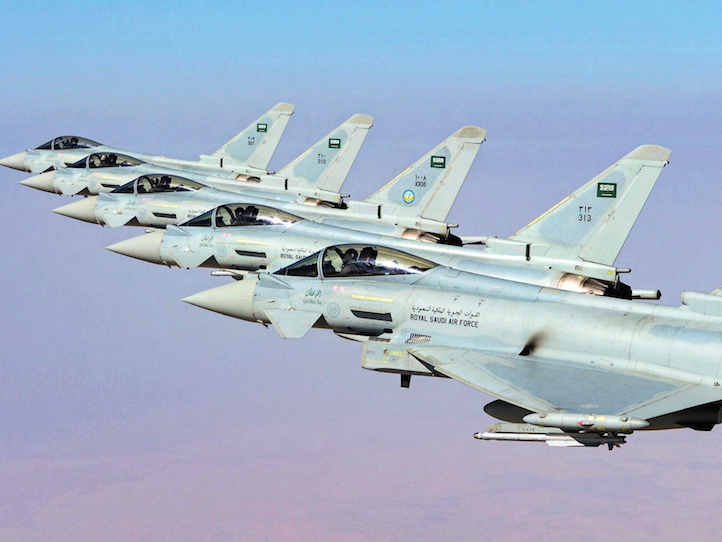
The JF-17 Thunder: A Cost-Effective Multirole Fighter
The JF-17 Thunder (also known as FC-1 Xiaolong in China) is a lightweight, single-engine, multirole combat aircraft jointly developed by Pakistan Aeronautical Complex (PAC) and China’s Chengdu Aircraft Corporation (CAC). Production occurs primarily at the Kamra facility in Pakistan, making it a flagship of Islamabad’s domestic defence industry.
The latest Block III variant—central to the talks—features advanced capabilities including an Active Electronically Scanned Array (AESA) radar, modern electronic warfare suites, helmet-mounted display, infrared search and track (IRST) system, and compatibility with beyond-visual-range missiles like the Chinese PL-15. Powered by the Russian Klimov RD-93 turbofan, it achieves a top speed of Mach 1.6, a combat radius of around 1,200 km, and a service ceiling of 50,000 feet.


Priced at an estimated $50-60 million per unit (far below Western equivalents like the F-16 or Eurofighter Typhoon), the JF-17 appeals to budget-conscious buyers. Its combat credentials have grown following reported operational use by the Pakistan Air Force (PAF) in regional tensions, boosting its export appeal.
Pakistan Offers Saudi Arabia to Repay the Loan with JF-17 Fighter …
Pakistan has aggressively marketed the platform, securing recent deals including a reported $4 billion+ arms package with Libya’s National Army (including JF-17s) and ongoing talks with Bangladesh and others.
Background: A History of Mutual Support
Saudi Arabia has long been a financial lifeline for Pakistan. Over the past decade, Riyadh has provided billions in loans, oil credits, and deposit rollovers—most notably a $6 billion package in 2018 and subsequent deferments—to help stabilize Islamabad’s economy amid repeated IMF programs (including the current $7 billion arrangement).
In return, Pakistan has offered military expertise, training Saudi pilots, and deploying troops for security operations. The September 2025 mutual defence pact—signed amid regional turbulence following Israeli actions in the region—formalized this alliance, paving the way for deeper operational cooperation.


Recent high-level engagements, including Pakistan Air Chief Marshal Zaheer Ahmed Baber Sidhu’s visit to Riyadh in early January 2026 to discuss “bilateral defence cooperation and regional security,” have accelerated momentum.
Strategic Implications for Both Sides
For Pakistan, the deal sustains production lines at PAC, creates jobs, generates foreign exchange (though shared with China), and positions the country as an emerging arms exporter. Defence Minister Khawaja Asif has touted such exports as a path to reducing IMF dependency, though analysts caution that even optimistic sales represent a fraction of Pakistan’s massive debt burden.
For Saudi Arabia, the JF-17 offers affordable diversification. The Royal Saudi Air Force (RSAF) relies heavily on U.S. platforms like the F-15 and Eurofighter Typhoon, with aspirations for F-35s (complicated by regional politics). The JF-17 provides a low-cost supplement for secondary roles, training, or rapid fleet expansion—especially amid Yemen conflicts and Gulf tensions.
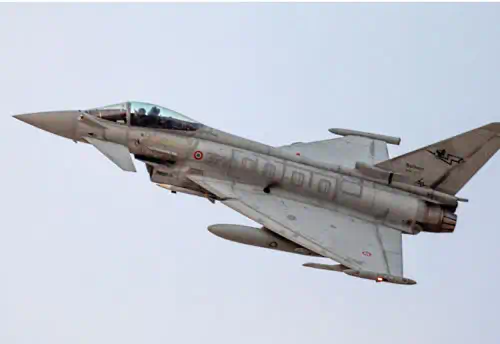
Saudi Air Power
However, integration challenges loom: blending Chinese/Pakistani systems with Western infrastructure could require significant effort, and potential technology exposure risks (given U.S. sensitivities) may deter full commitment.
Global Reactions and Uncertainties
The talks have drawn mixed commentary. Some view it as innovative South-South cooperation; others question Saudi interest in a “budget” fighter amid high-end ambitions. Pakistan’s Foreign Office stated it is “unaware” of any finalized deal, suggesting negotiations remain preliminary.
As Pakistan pursues exports with six countries (per retired Air Marshal Aamir Masood), this potential Saudi pact could mark a milestone in its defence-industrial rise.
The arrangement—fusing debt relief with military modernization—exemplifies how economic necessity and strategic hedging are reshaping alliances in a multipolar world. Whether it materializes remains to be seen, but it underscores the evolving Pakistan-Saudi bond.


Leave a Reply